
01The challenge
LASP is the largest, oldest, and highest-funded research institute at CU Boulder, with instruments on missions from Europa Clipper to MAVEN. And yet it was relatively unknown compared to the work it had been doing for three-quarters of a century. The lab had never needed, or built, much of a marketing emphasis: the science spoke for itself, to the small audience that already knew where to listen.
That anonymity had a cost, in partnerships never sparked, funding conversations never started, and a hometown, from the Denver metro to the CU Boulder campus itself, that didn’t know a world-class space institute was in its backyard. LASP needed a leader to come in and propel it to new heights of recognition: national, global, and local. And it had to be done with virtually no marketing budget, a constraint that shaped everything that followed: reach would have to be earned, not bought. That was my mandate.
02The strategy
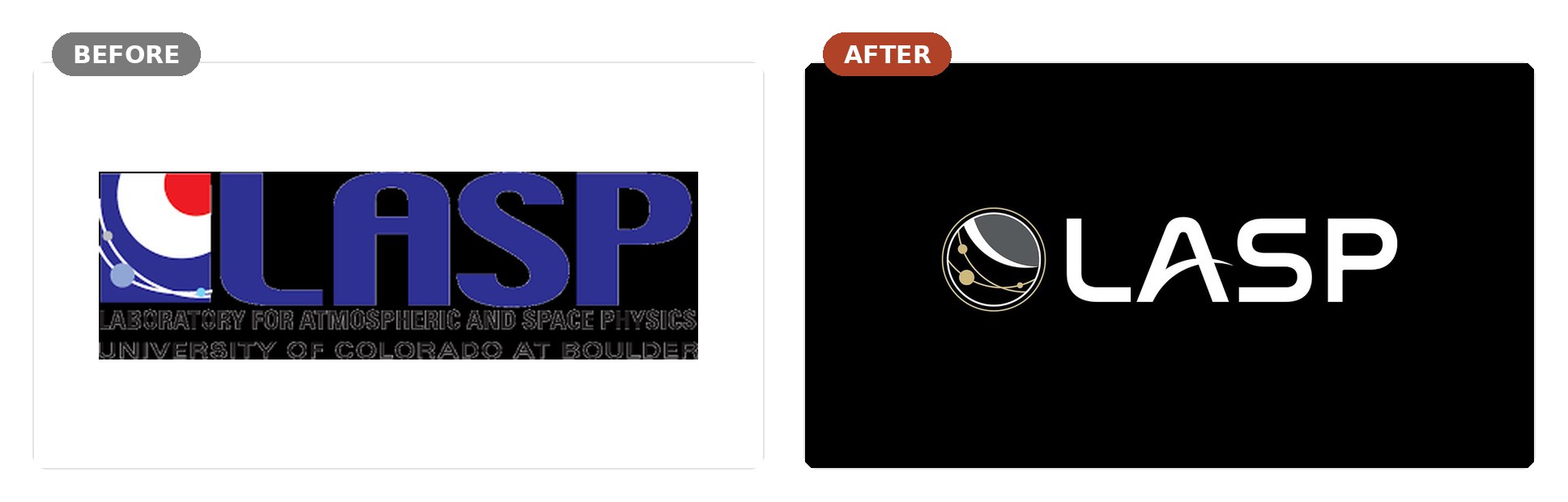
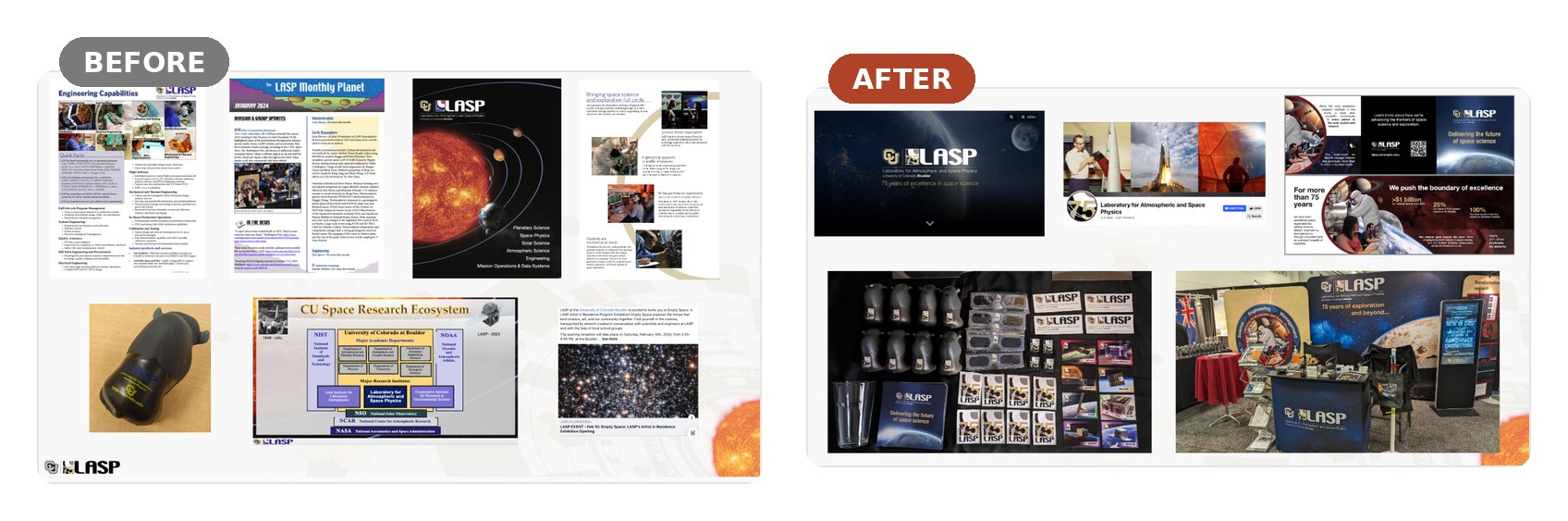
The solution paired a 75th anniversary campaign with a brand refresh, modernizing LASP’s identity and aligning it with the University of Colorado. The anniversary gave the year a spine: a full calendar of communications celebrating the lab’s vast history while pointing forward to the incredible missions ahead. The refresh gave the lab one voice: a large slate of improved print and event materials that armed our scientists and researchers with better-branded tools for conferences and partner meetings, a uniform look and feel across the institute, and, for the first time, a culture of brand inside the lab.
Winning that culture took more than design files. I sat on the institute’s strategic planning committee as the marketing and communications lead through the year-long project, working marketing, brand, and communications into the lab-wide strategic plan and presenting the case to an institute of 750 scientists, engineers, and staff: that marketing exists to achieve the lab’s goals, to intrigue and secure new partnerships, raise money, and drive awareness of the research itself. I also built deep relationships with CU’s central marketing teams, aligning the brand with the university and earning the mentions and amplification that extended our reach far beyond the lab’s own channels.
With almost nothing to spend on paid media, earned attention was the entire growth strategy, built through grassroots efforts, relationships, and moments worth talking about. So we took the brand somewhere no research lab usually goes: I co-led a space-themed CU football game, riding the enormous buzz of Deion Sanders’ first season coaching the Buffs. The game generated millions of earned impressions and gave LASP something it had never had: broad local awareness of who we were and what we did.
03The work
04The results
of earned impressions from the space-themed CU football game
scientists, engineers, and staff brought into a new culture of brand
of history organized into a year-long anniversary campaign
of the strategic plan, embedding marketing in lab-wide goals
This worked because the science didn’t need a new story. It needed an audience. The refresh gave 750 people one voice, the anniversary gave the year one spine, and a football stadium gave the lab an introduction to its own backyard.